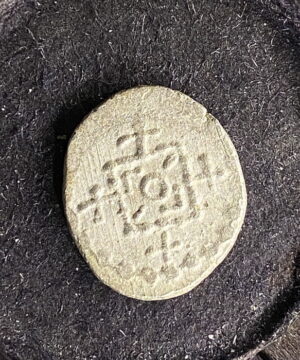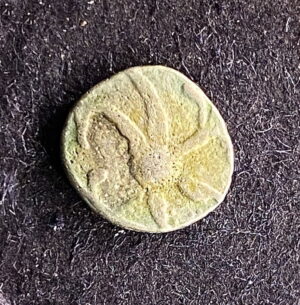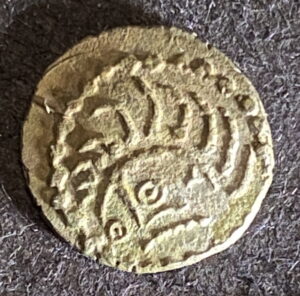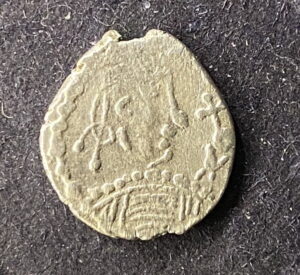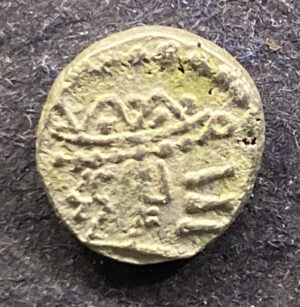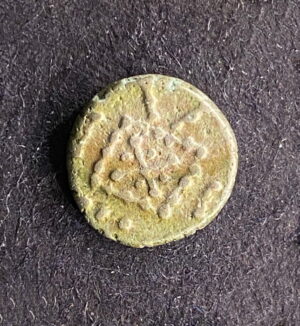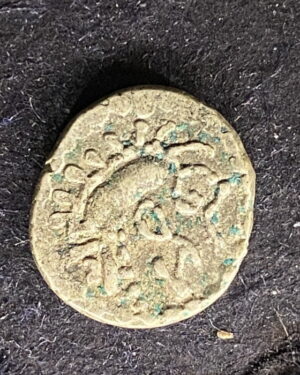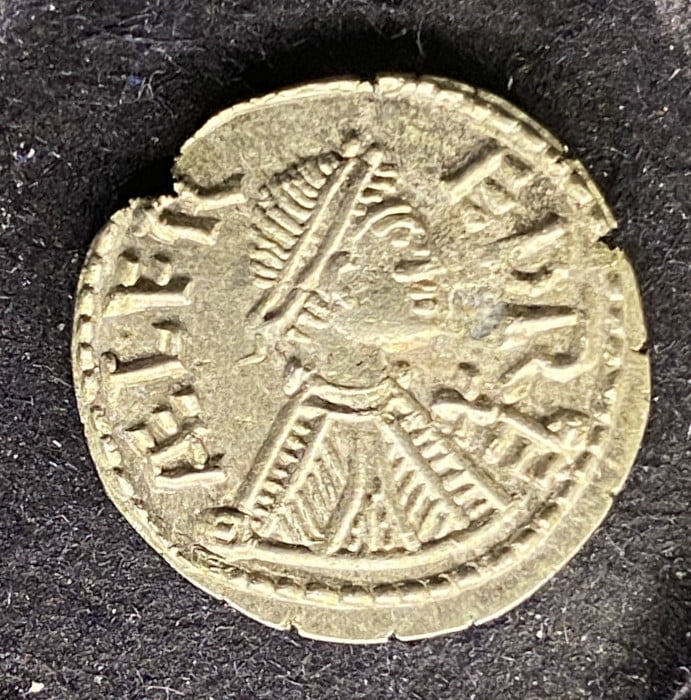
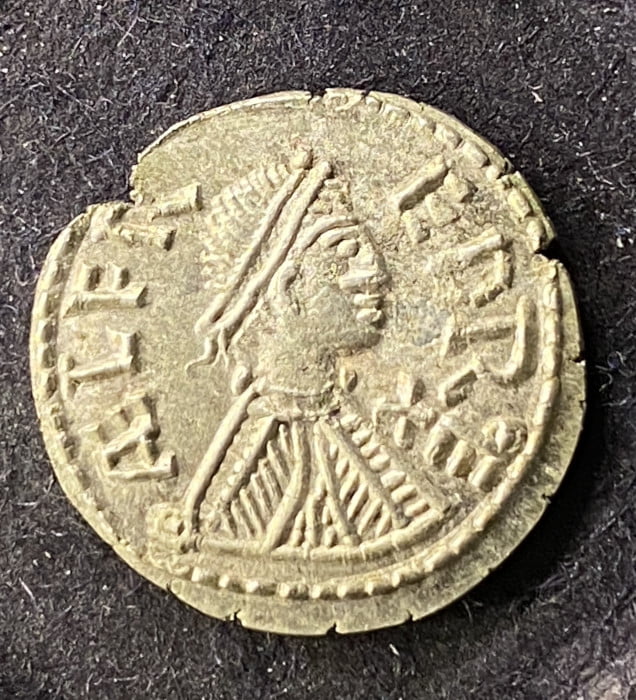
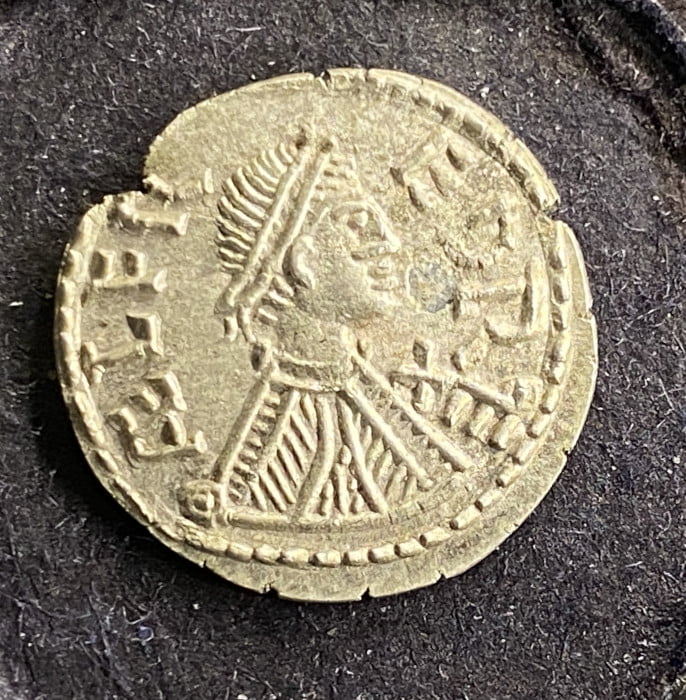
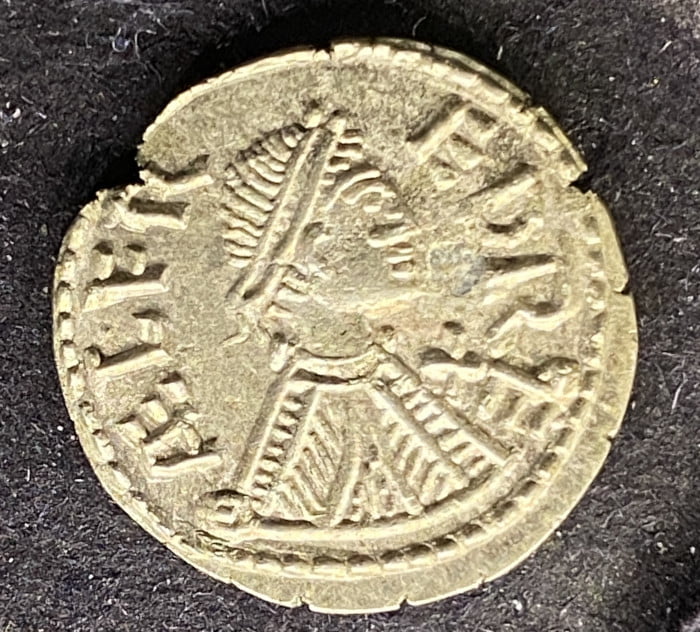
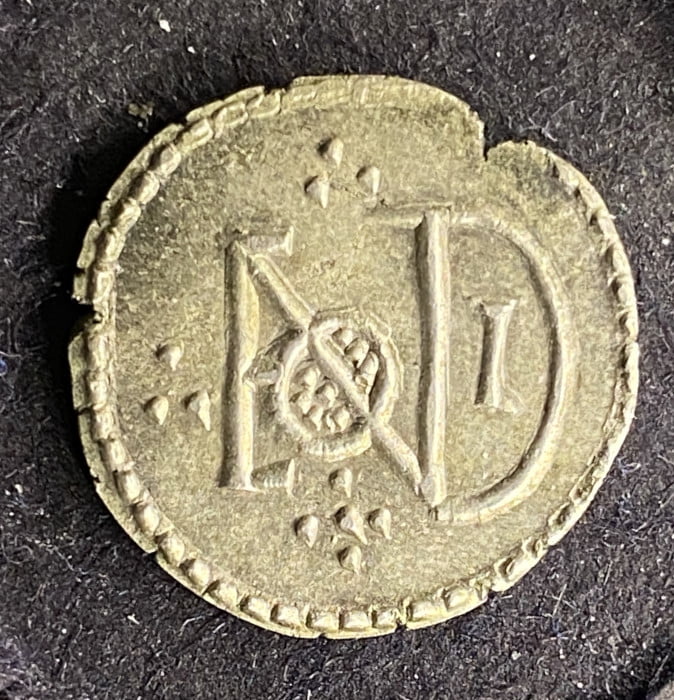
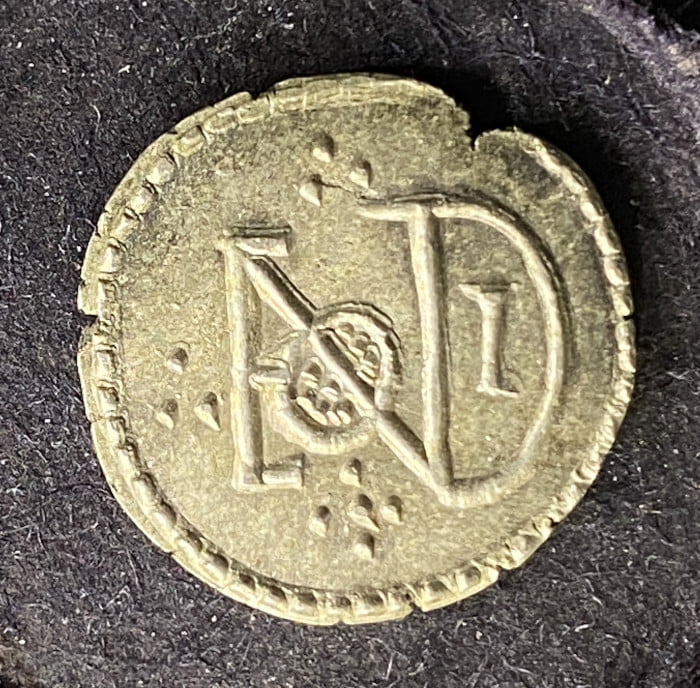
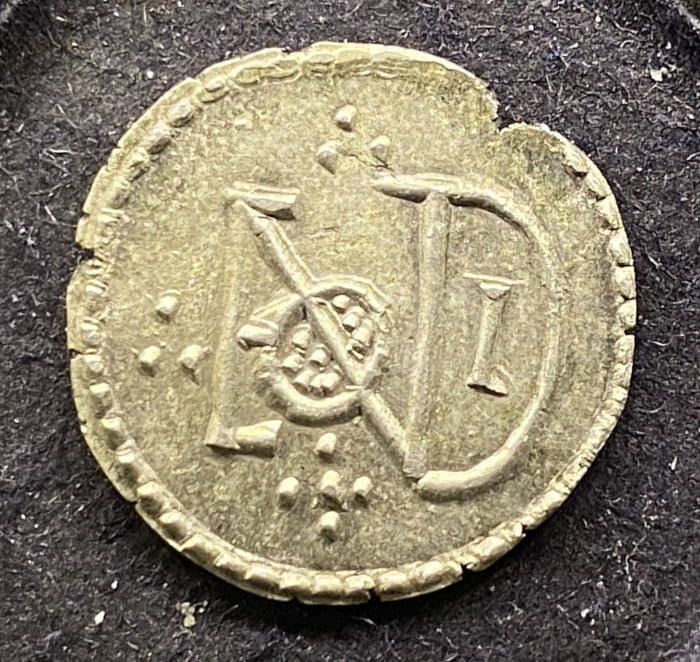

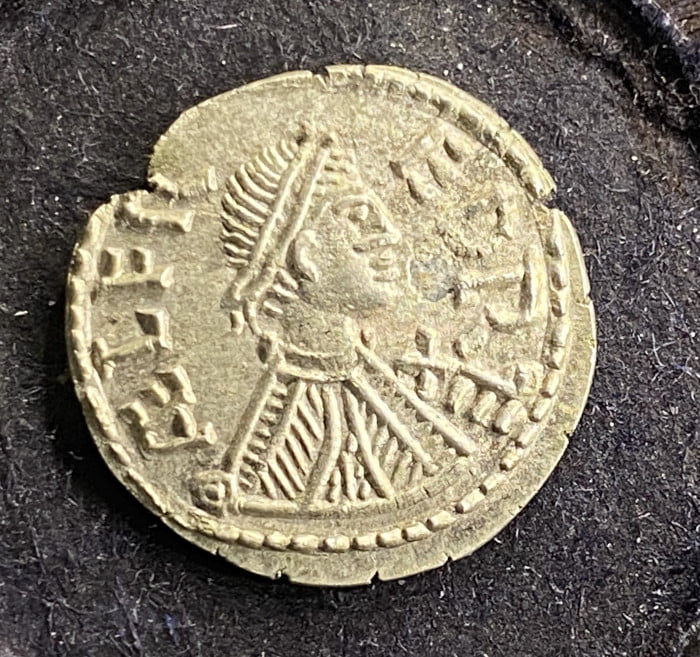
Description
| Ruler: Alfred | Period: 871 to 886 |
|
|
|
- Citizens of the Byzantine empire would have recognised themselves as "Roman". The Byzantine Empire was a medieval and early modern state that existed in southeastern Europe between the 4th and 15th centuries. It was a successor state of the Roman Empire, it was founded by the Roman Emperor Constantine I in 324 AD at Constantinople (now Istanbul) and lasted until 1453. During most of its existence, it was the most powerful economic, cultural, and military force in Europe in parallel with the growing power of the Frankish and Holy Roman Empire. As a continuation of the Roman Empire, it is also conventionally referred to as the Eastern Roman Empire or Byzantium.
- The first silver coins were minted in Lydia in Asia Minor around 600 BCE though its use for coinage at scale can really be attributed to the Greeks, with silver Obols and Drachms. Roman silver coinage included the Denarius in the 3rd century BC which came to be the backbone of Roman Republican and early Empire monetary system. This was replaced in the 3rd century AD by the double denarius which is generally referred to as an Antoninianus, denoted by the emperor's image with a radiate crown. A later Roman silver coin of the 4th century AD was the Siliqua. Silver has been used for coinage throughout history because it is durable, malleable, and has a relatively low melting point. It is also abundant enough to create coins but rare enough so that not everyone can produce them. Silver is also valuable enough so that it can easily be exchanged for goods and services.